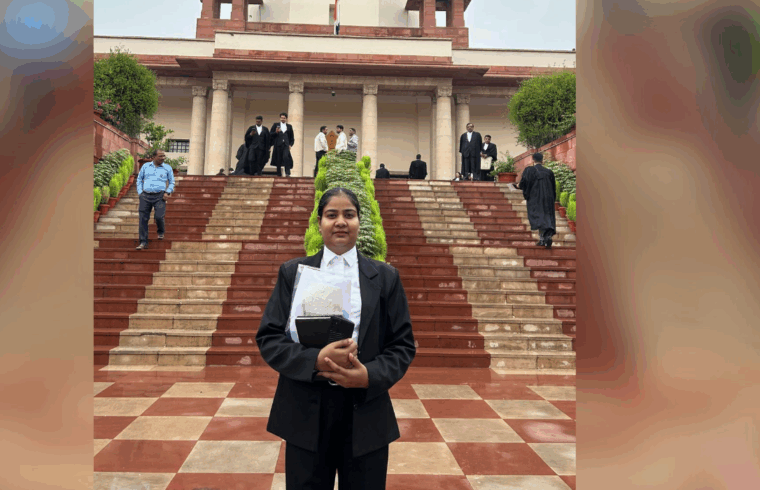
 Suneina Gill outside Supreme Court of India. Photo: By arrangement.
 Lack of opportunities and guidance has never stopped Suneina Gill from dreaming big — and pursuing those dreams with conviction. Belonging to the Dalit Christian community, she and her family faced double discrimination. With a father who had studied only up to eighth standard and a mother who was unlettered, there was no roadmap for education. Yet, Suneina saw in learning a path to break free from the indignities her family endured in a caste-ridden society. Against the odds, she achieved a remarkable feat: securing a gold medal at Desh Bhagat University in Punjab. The honour recognised her standing first in a class of 60, her academic diligence, and her consistent attendance. Today, she is on her way to becoming the first lawyer in her family — a striking testament to how Dalit Christians are breaking the cycle of exclusion through education and meaningful professions.
Her journey was not shaped by elite schools, expensive tuitions, or well-connected parents. Her father and mother, both employed as sweepers with the Jammu Municipal Corporation, worked hard to support her dreams. While her elder siblings, who studied up to the 10th standard, were married off early, Suneina’s parents saw her promise and backed her education despite their meagre means. From her earliest days at Church Nursery School and later at Shiksha Bhavan Higher Secondary School in Jammu, she ranked among the top students, proving her resolve to rise.
For Suneina, education was not just about personal advancement — it was about reclaiming dignity for her family and community. She first set her sights on the Civil Services, aspiring to join the Indian Administrative Service. Though she could not clear the exam on her first attempt — taken without coaching or resources — her parents reminded her that time was on her side, urging her to persevere.
Law, too, had always tugged at her heart. Without preparation, she attempted the Common Law Admission Test (CLAT), securing an All-India rank of 4001 in the open category among 70,000 candidates. While her parents encouraged her to pursue admission in a National Law University, Suneina chose Desh Bhagat University in Punjab — her ancestral land — so she could stay close to home.
The move to a hostel was daunting at first. But she found strength in her studies, her Bible, and her prayers. The youngest in a class filled with students from privileged backgrounds — some seasoned professionals returning after years in other careers — she quickly stood out for her warmth, leadership, and academic commitment, eventually being chosen class representative. She studied diligently, took no shortcuts, and refused to let health setbacks or financial strain derail her.
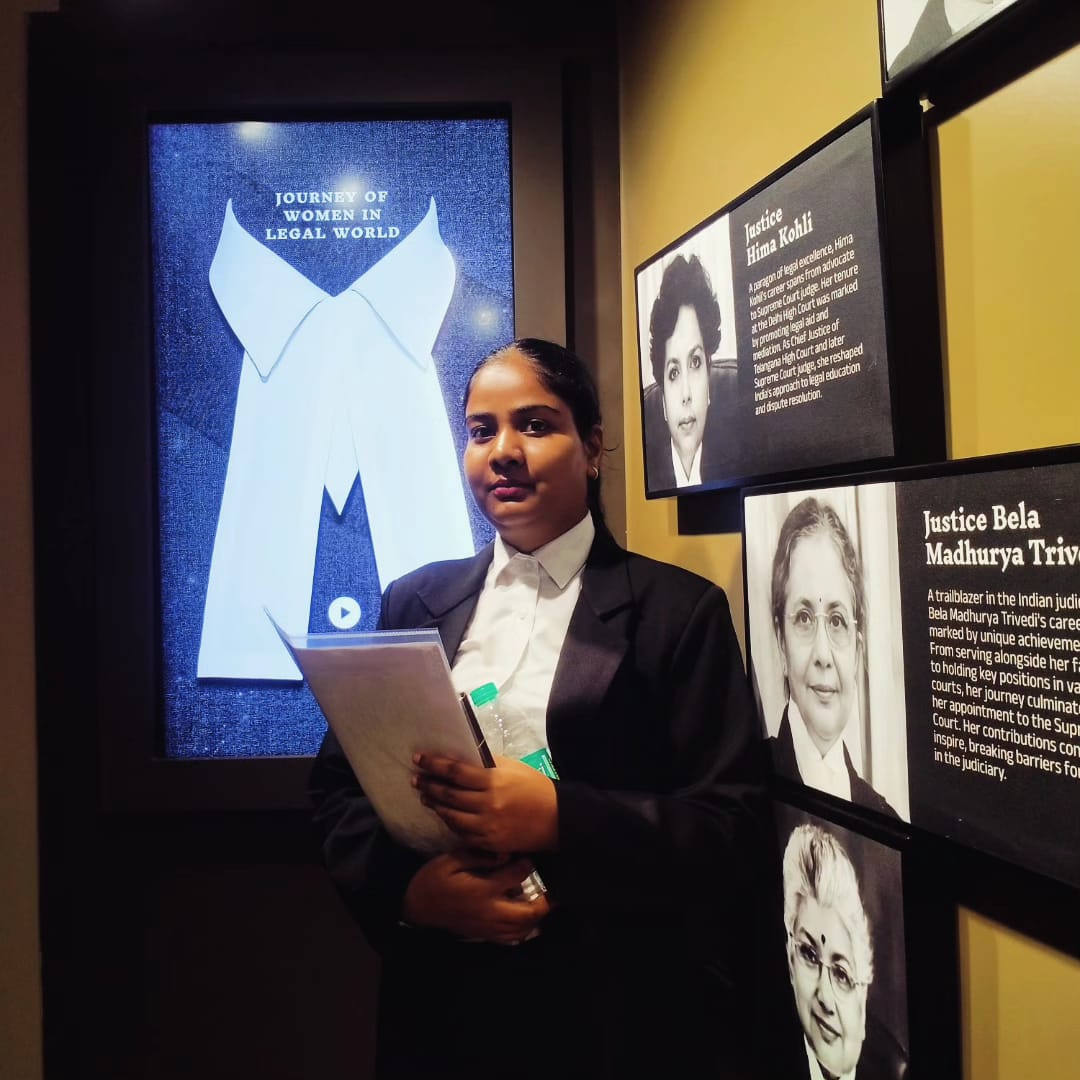
Her father even broke into his provident fund savings to finance her education — a sacrifice that strengthened her resolve to excel. Mentorship from Dr. Aarthi, a professor who guided her academically and personally, gave her the direction she needed.
Beyond the classroom, Suneina interned with senior lawyers and local courts, eager to gain hands-on experience. Her hard work paid off: she graduated with 80% marks, topping her class of 60, and was awarded the gold medal in LLB. Now, she has embarked on her LLM in Criminal Law, determined to match — or even surpass — her earlier achievement. Her dream is to one day become a judge.
“I want to be a voice for the voiceless in my Dalit Christian community, and beyond,” she says with quiet conviction. “People in my village grow up fearing the police and courts. I tell them these systems exist for us, to deliver justice.”
Yet, she admits, what she has witnessed so far is far from equal. “Too often, justice favours the rich and powerful. Even with my legal education, I have faced discrimination as a Dalit, a Christian, and a woman.” Her hope is to change that — to use the law not merely as a profession, but as a calling, bringing justice to those who are silenced.