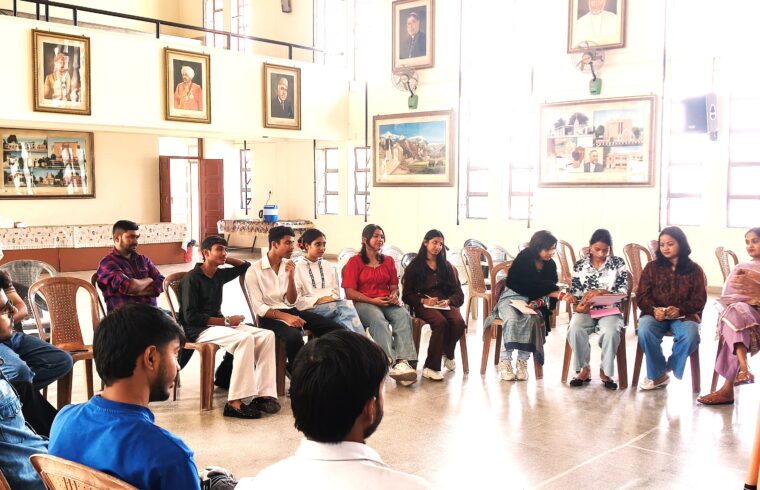
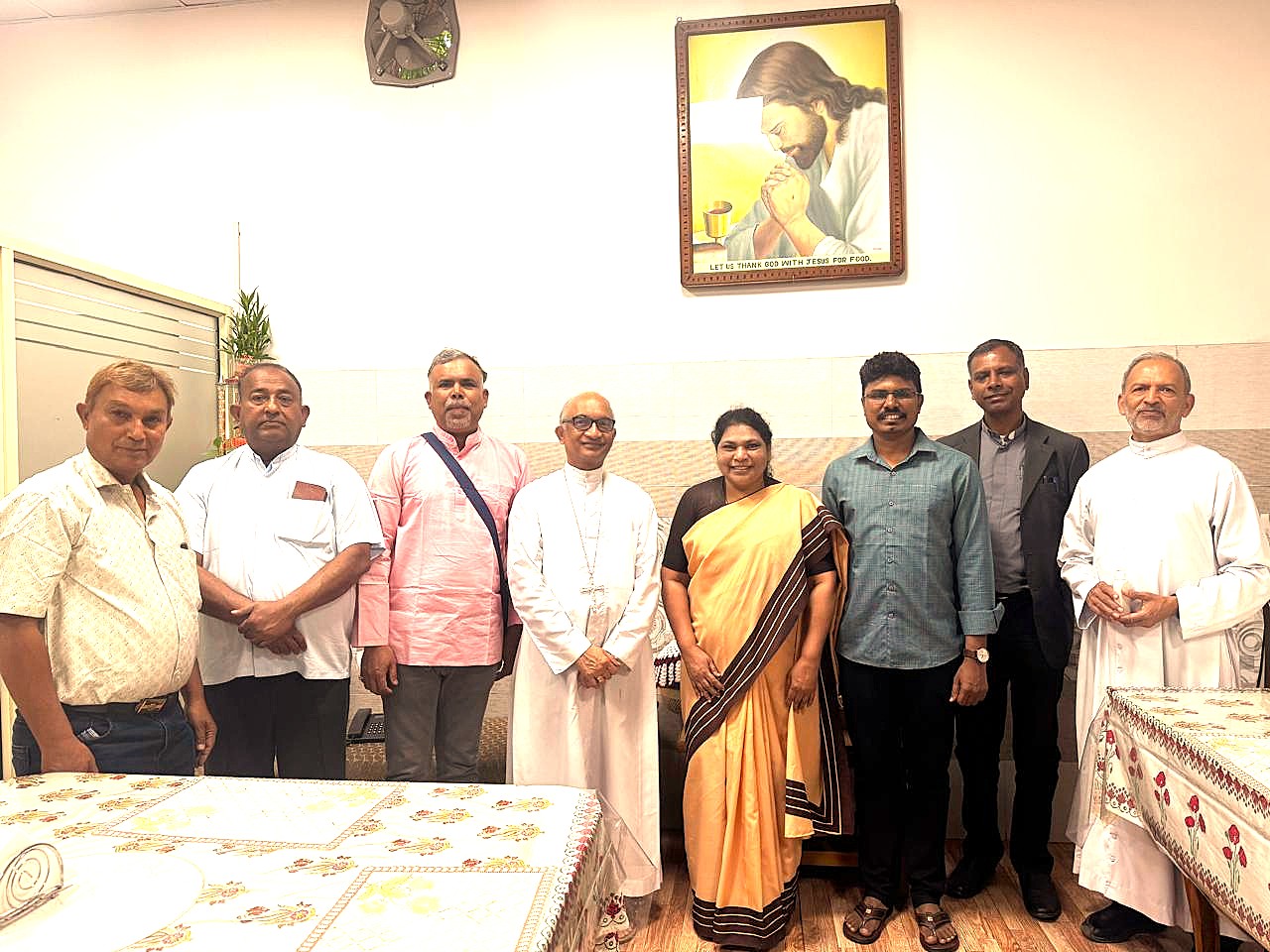
 NDCW General Secretary Sister Manju Devarapalli and NDCW J&K State Coordinator Ashu Peter with participants at NDCW youth leadership training programme in Jammu in October 2026
Jammu: About 35 Christian youth gathered in Jammu for a leadership training programme organised by the National Dalit Christian Watch (NDCW) to develop strategies to address caste-based discrimination in their churches, schools, colleges and wider spheres of influence. Participants pledged to uphold the Christian values of truth, justice, fraternity and equality as integral to their lives and mission.
Held from October 23 to 26 at the Pastoral Centre of Maitri Bhawan under the Jammu and Kashmir Diocese, the programme drew participants from Jammu and Kashmir, Gujarat, Telangana and Delhi.
Founded in 2016 by a group of theologians, human rights defenders, lawyers and development consultants, NDCW is an ecumenical body that seeks to unite Christians in the fight against caste oppression and its manifestations across churches, denominations and society. The training programme is part of a series of leadership initiatives NDCW is conducting in different states to raise awareness about caste among young people and prepare them to become future leaders in the struggle for equality.
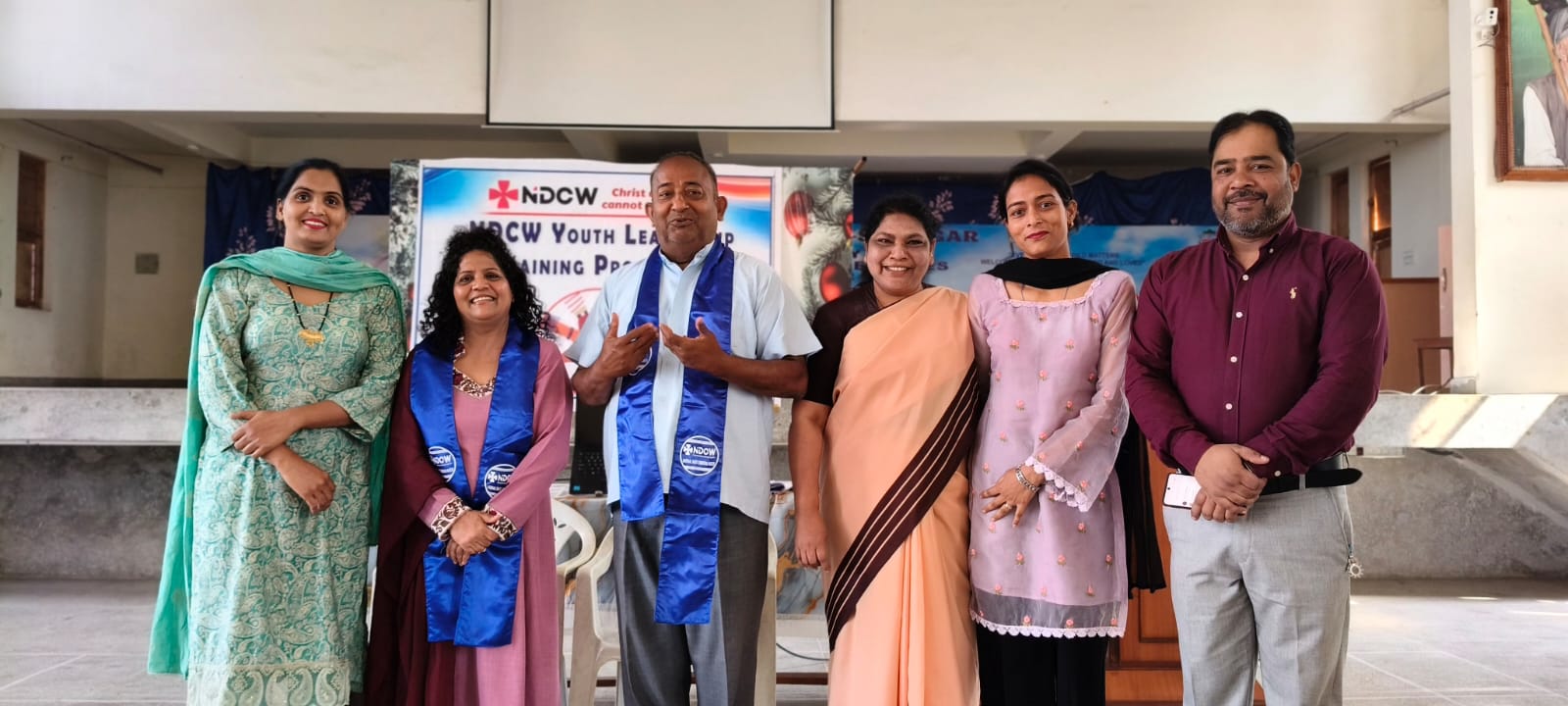
NDCW General Secretary Sister Manju Devarapalli began the training by introducing participants to caste and its evolution in Indian society, the emergence of Christianity in the subcontinent, the realities of Dalit Christians, and contemporary efforts by caste-conscious Church leaders to combat discrimination. Participants, aged 15 to 35, shared how caste had shaped their lives in schools, colleges, churches, and communities.
Prominent Jammu-based educator and Christian leader Dr Aksa Rao spoke about “servant leadership”, as demonstrated by Jesus Christ and biblical figures such as David, Joseph and Moses. Drawing extensively on Scripture and her own humble beginnings, she emphasised that living by Jesus’ teachings and having confidence in oneself were essential to personal growth and leadership.
“Our role model is Jesus Christ himself,” said Rao, head of the Department of English at Government Degree College (GDC), Akhnoor. “As the followers of Christ, our leadership approach is not to feel insecure, but to empower those less well-to-do than us and make them leaders in their own right.”
Senior journalist Vikram Mukka addressed the “double discrimination” faced by Dalit Christians on account of being both Dalits and Christians. He urged participants to recognise the systemic barriers confronting Dalit youth and navigate their careers with an understanding of how dominant-caste individuals often get a “head start in life” because of accumulated privilege.
“Hard work alone would not suffice in a system that is rigged against you [Dalits],” said Mukka, who also serves as the coordinator of NDCW’s Dalit Christian Digest. He encouraged Dalit youth to excel in their chosen fields so that they could not be ignored and could gain access to influential professional circles. Beyond developing their skills and aptitude, he stressed the importance of building strong professional and personal networks in a system “where opportunities are not democratised.”
Father Rev. Dr Charles Davis of the Conference of Catholic Bishops of India (CCBI) spoke about human dignity as the foundational principle of the human rights framework.
“Human dignity is an intrinsic value God endowed us all with,” said Father Davis, director of CCBI’s Bioethics Forum. “No one and no system can take that away from us, because all of us are the images of God.”
He acknowledged that communities and organisations may have “functional and relational differences” to carry out their work and ensure that members fulfil their respective roles effectively. However, he cautioned against allowing such differences to become a vertical hierarchy that overrides the “God-given human dignity” of every person.