Allahabad high court. Photo: Wikimedia Commons/Vroomtrapit at English Wikipedia/CC0 1.0
New Delhi: In a ruling with significant implications for caste and minority rights, the Allahabad High Court on February 10 observed that conversion or marriage does not alter a person’s caste status, reiterating that caste is rooted in social origin rather than religious affiliation.
The observation came in a recent order concerning caste determination. The court noted that caste identity flows from birth and social circumstances, and therefore cannot automatically change due to a change in religion or marital status.
While the case itself was specific in scope, the court’s remarks echo earlier judicial thinking that caste discrimination is a social reality that may continue even after a person adopts another faith.
Legal observers say the ruling does not directly address reservation policy. Still, it reinforces a key principle long debated in India: that caste is a lived social condition, not merely a religious category.
Why the Ruling Matters for Dalit Christians
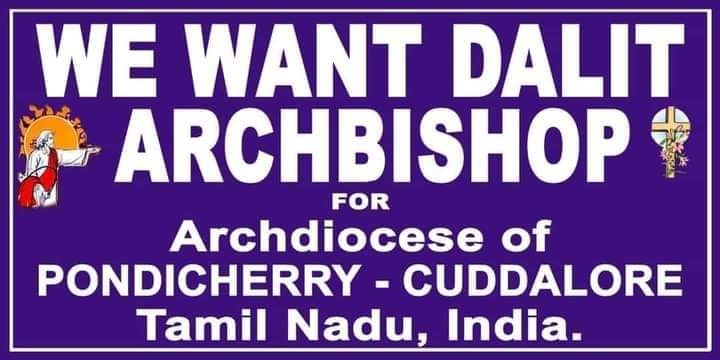
The court’s observation has drawn attention because it intersects with a major unresolved issue — the legal status of Dalits who convert to Christianity or Islam.
At present, under the Constitution (Scheduled Castes) Order of 1950, Scheduled Caste recognition — and the associated affirmative action benefits — is limited to Dalits belonging to Hinduism, Sikhism, and Buddhism. Dalit Christians and Dalit Muslims remain excluded, despite longstanding demands for parity.
By affirming that caste identity persists beyond conversion, the High Court has implicitly acknowledged the core argument made by Dalit Christian advocates for decades: changing faith does not erase social stigma or discrimination.
A Long-Standing Contradiction
The ruling highlights a broader policy contradiction in India’s caste framework. Courts frequently recognise caste as a social and historical reality, while the legal system still ties Scheduled Caste status to religious identity.
This tension is at the heart of ongoing petitions before the Supreme Court and the work of government-appointed commissions examining whether SC status should be religion-neutral.
For Dalit Christian groups, the High Court’s words are being read as a reaffirmation of their lived experience — that exclusion and prejudice often continue even after conversion, both in society and, at times, within church structures.
More Than a Legal Observation
Though the ruling does not immediately change policy, it adds moral and legal weight to the demand for equal recognition of Dalit Christians.
In reaffirming that caste is not erased by conversion, the Allahabad High Court has effectively underscored a truth long voiced by Dalit theologians and activists: justice must be grounded in social reality rather than formal religious identity.
As national debates on anti-conversion laws, minority rights, and caste-based protections continue, the court’s observation is likely to remain part of the wider conversation on equality, dignity, and the unfinished quest for justice among Dalit Christians.