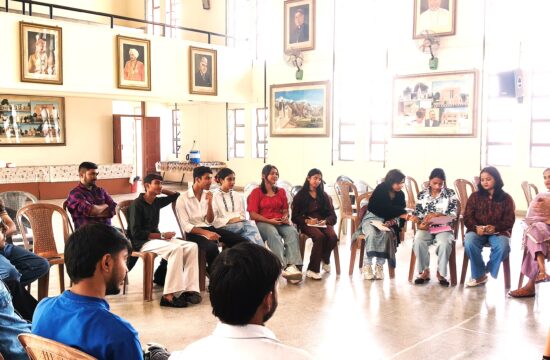
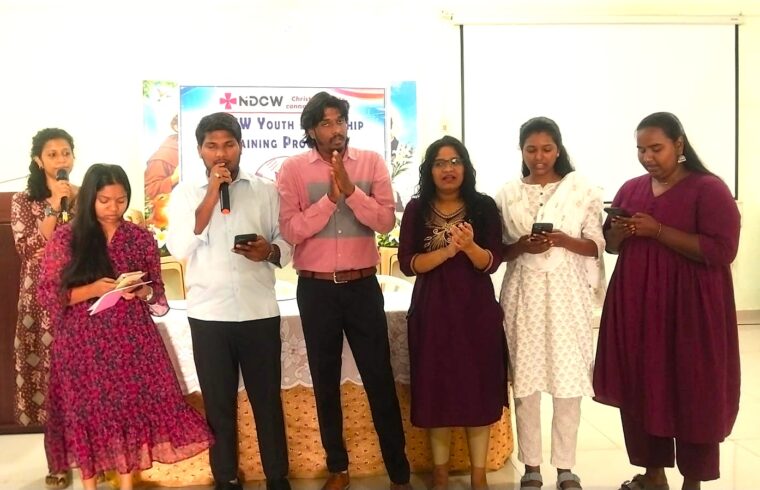
 Participants at National Dalit Christian Watch's Youth Leadership Training in Puducherry. Photo: Special arrangement.
Puducherry: The struggle of Dalit Christians for Scheduled Caste (SC) status is not only a question of constitutional recognition. It is also a struggle against caste discrimination that continues to shape their lives within society and, in troubling ways, within the Church. Bringing these concerns together, the National Dalit Christian Watch (NDCW) called on young Dalit Christians to take a leading role in the campaign for equal rights and social justice at a three-day leadership development programme in Puducherry.
Held from November 13 to 15 at the Gonzaga Animation Centre, the programme brought together young participants from Tamil Nadu, Kerala, Telangana, and Andhra Pradesh. Discussions centred on the Catholic Church’s Dalit Empowerment Policy, the constitutional exclusion of Dalit Christians from SC recognition, and the responsibility of young people to confront caste-based discrimination.
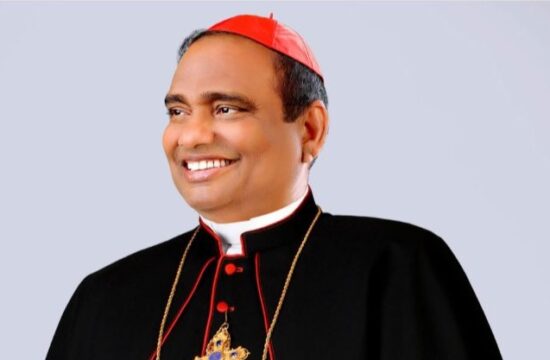
The opening session, initiated by NDCW chairperson Dr Richard Devadoss, examined the forces that divide Christian communities, including caste, gender, and the misinterpretation of Scripture. Participants began by reading the Preamble to the Constitution, affirming the values of justice, liberty, equality, and fraternity that informed the discussions.
A key session led by Fr Dr Z. Devasagayaraj examined the Catholic Church in India’s Policy of Dalit Empowerment, approved by the Catholic Bishops’ Conference of India (CBCI) in 2015 and released in December 2016. The policy seeks to advance Dalit empowerment through education, employment, and entrepreneurship, while identifying untouchability as a grave social sin and calling for a fundamental change in attitudes within the Church.
Devasagayaraj noted that Dalits constitute approximately 65 per cent of India’s Catholic population but continue to face discrimination and inadequate representation in Church structures. Nearly a decade after the policy’s release, he questioned the extent of its implementation, pointing to continuing concerns such as restrictions on burial rights and inadequate encouragement of local vocations among Dalit Christians.
The discussions also turned to the constitutional basis of the community’s demand for SC recognition. Paragraph 3 of the Constitution (Scheduled Castes) Order, 1950, restricts SC status to members of Hindu, Sikh and Buddhist communities. Consequently, Dalits who embrace Christianity are excluded from SC reservation benefits and certain constitutional and legal safeguards, including protections under the Scheduled Castes and Scheduled Tribes (Prevention of Atrocities) Act, 1989.
The workshop highlighted the need for sustained legal intervention and public advocacy to challenge this exclusion. Participants also discussed the Supreme Court’s 1985 Soosai judgment, a public interest litigation filed in 2004, and the Ranganath Misra Commission‘s recommendation to remove the religious restriction.
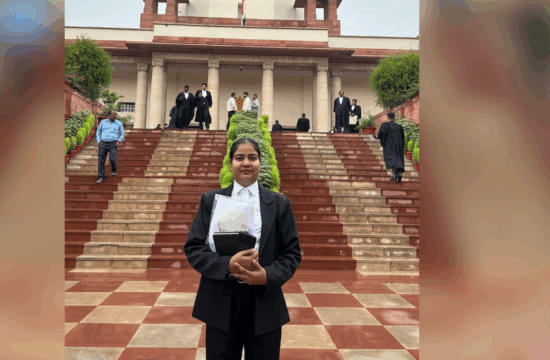
Gender justice formed another important strand of the programme. Advocate Selvi, in a session on gender sensitivity, examined discrimination against women across different stages of life, from restrictions surrounding menstruation to the unequal treatment of girls facing teenage pregnancy. She urged participants to challenge victim-blaming, support vulnerable women, and promote their representation in decision-making spaces. She also raised concerns about workplace harassment, caste discrimination and the exclusion of transgender persons from families, churches and employment.
In a separate session, Kavitha Gajendran discussed constitutional rights and Ambedkar’s vision of using constitutional democracy to transform a society marked by caste discrimination, patriarchy, and feudal structures. She emphasised that political democracy cannot endure without social democracy, and urged participants to confront discrimination within their own families and communities.
Group discussions identified priorities for action, including youth leadership initiatives, parish-level awareness campaigns, engagement with Church authorities, social media advocacy and stronger networks among Dalit Christian organisations. Participants also called for systematic documentation of discrimination to strengthen legal efforts.
Established in 2016, NDCW works to combat caste-based discrimination within the Church and wider society. Its guiding conviction, expressed in the motto “Christ and Caste Cannot Go Together,” places the Church’s own practices alongside the wider campaign for Dalit dignity and equality.
The programme ended with an emphasis on youth advocacy and action planning. Its central message was that the demand for constitutional rights must go hand in hand with the work of dismantling caste discrimination wherever it persists.